
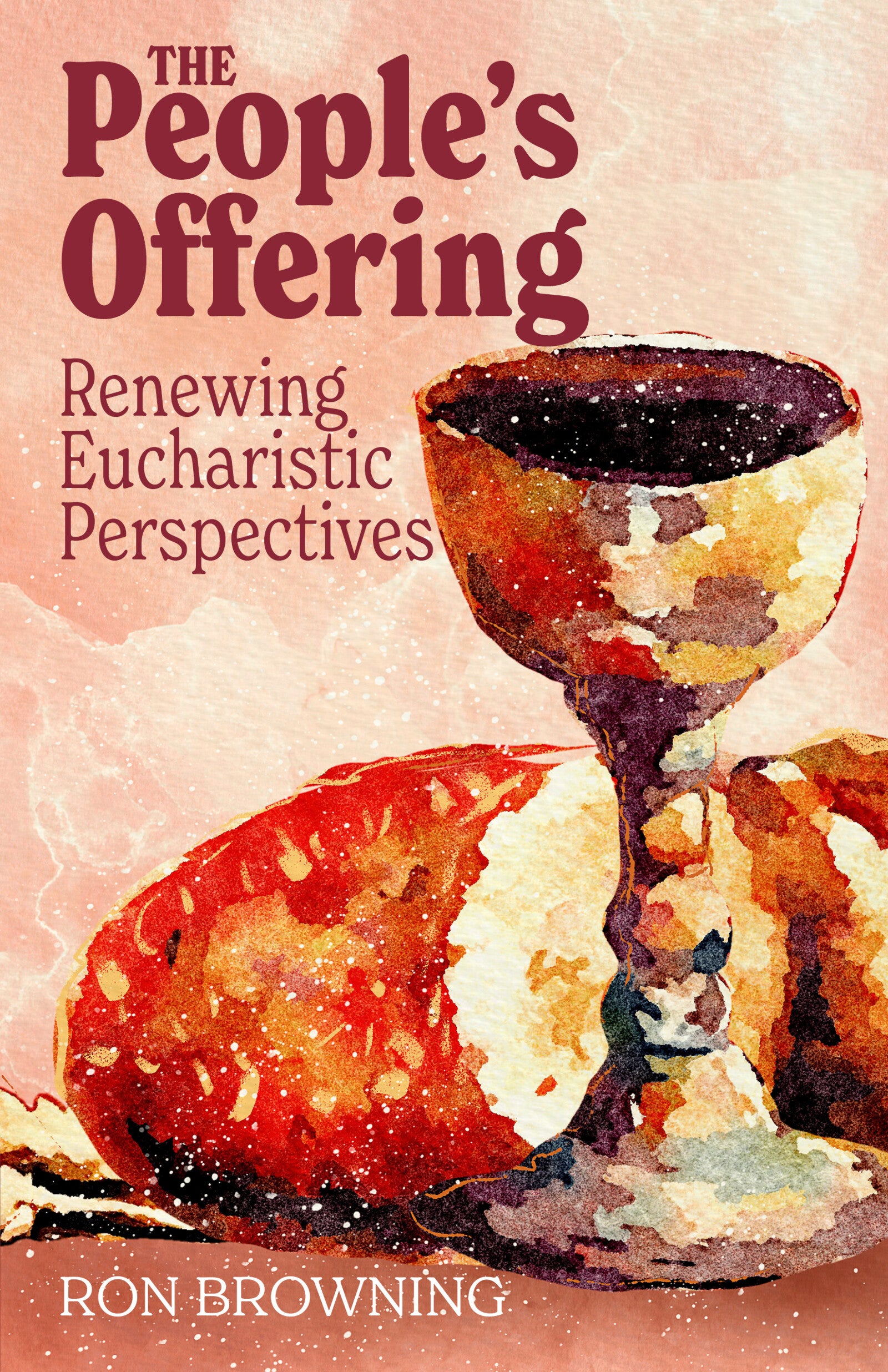
Description
For centuries, Christian worship has centered on receiving grace at the Lord’s Table. But is the Eucharist only about receiving? In The People’s Offering, Ron Browning invites readers to rediscover the neglected dimension of offering—our prayers, our lives, and our hope—within the sacrament.
Tracing the journey from the Early Church through the Reformation to modern liturgical renewal, Browning explores how offering shapes Christian identity and agency today. With insights from Anglican, ecumenical, and Eastern Orthodox traditions, this book opens a fresh vision of the Eucharist as a dynamic act of thanksgiving, intercession, and self-giving love.
Accessible yet deeply rooted in scholarship, The People’s Offering is for clergy, students, and all who long to enter the mystery of Christ’s sacrifice more fully—and to live it in the world.
When we worship God, we walk into a poem. Liturgy is poetry in motion. The language of worship secures us in a story that we are to live in and live out. Browning’s excellent book helps us understand the richness and significance of some of this language and movement, especially those tricky terms “offering” and “sacrifice”. God’s heart offers and sacrifices, but how do we reciprocate? How do we get beyond the familiar in liturgy to encounter the Mystery to whom we belong? Browning takes us on a fascinating discovery of how the Church has responded to these questions through the generations, and, in doing so, has found itself living the adventure of Christian faith.
Mark Oakley
Dean of Southwark
Ron Browning has produced a well-researched and perceptive account of the various historical perspectives that have shaped current understandings of eucharistic worship. He examines critically the insights of the Early Church Fathers and the sixteenth-century English Reformers and identifies the various ways their influence impacted upon the liturgical developments of the mid-twentieth century.
This study is essential reading for all those concerned to understand and enact the fundamental principles of eucharistic structure and will encourage creative and informed future development.
John Shepherd
Emeritus Dean of Perth, Australia
Ron Browning’s book is important and scholarly, yet accessible in style. He revisits the people’s offering in the Eucharist as a living sacrifice, active in God’s service and worship, offered continually as a sacrifice of praise and the place where we offer ourselves as we are caught up in Christ’s sacrifice. Browning argues the sacrifice of Christ is represented and re-presented in the Eucharist as both living and incorporating. This book presents a rich understanding of offering in the Eucharist, emphasizing what people bring and offer when they celebrate the Eucharist, caught up in Christ’s sacrifice and renewing its effects.
Brian Douglas
Research Professor, Australian Centre for Christianity and Culture, Charles Sturt University, Canberra, Australia
The People’s Offering invites readers to buckle up for a roller-coaster ride through Eucharistic theology, beginning with the early Church, navigating medieval liturgies and the Reformation, touching on developments within Anglicanism, and progressing to the ecumenical renewal of the Eucharist in the twentieth century. Ron Browning draws on his lifetime of praying, reading about and pondering the Eucharist. How rusted-on within the liturgy are the various theologies of the atonement? What does it mean for worshippers to offer themselves to God? Browning asks interesting questions, and offers new insights.
Elizabeth J. Smith AM
liturgist and hymn writer, Anglican Church of Australia
Ron Browning brings—offers—the fruit of decades of priestly ministry, and the theological reflection and spiritual wrestling which have accompanied it, to this volume. While addressing primarily his own Anglican tradition, with its strengths and failings, he does so in an ecumenical spirit, drawing on the liturgical traditions of Eastern Orthodoxy as well as on ancient rites recovered and reconstructed by recent scholarship. The Offering is a minimized and neglected aspect of the Western eucharistic rite, especially in traditions derived from the 1662 Book of Common Prayer. Browning, reflecting particularly on his own experience in Burma, and also in Australia, demonstrates the cross-cultural importance of restoring and reimagining this rite in contemporary worship. He quite rightly emphasizes that the Eucharist cannot be fully appreciated apart from Baptism: the Body of Christ, of which Christians become members through Baptism, is to join with its head, Christ the eternal high priest, in perpetual intercession, in and through the offering of the Eucharist.
Nicholas Taylor
priest and New Testament scholar, South Africa
Contributors
Ron Browning (author)

Ron Browning is an Australian Anglican priest who mainly has served in parishes as well as taught theology. In recent years he has ministered among the resettled Karen refugee people from Myanmar and in their refugee camps.
Philip Freier (foreword)
Philip Freier is the Anglican Archbishop of Melbourne and co-chair of ARCIC (the Anglican Roman Catholic International Commission).