Few elements of worship are as immediate or as transformative as music: it shapes our liturgy, gives voice to our shared story, and resonates long after a service has ended. In this blog, Andy Thomas reflects on how music not only enriches communal worship but also forms us individually as followers of Christ – helping to shape our identities, connect our personal stories with the wider Christian narrative, and open us to experiences of the divine in ways that words alone often cannot.
Music shapes worship. A sensitive choice of hymn or song can capture the theme and bring it alive. A short chant repeated after each prayer during the intercessions can focus our minds and open a window to the divine. An uplifting voluntary after the dismissal can lift our spirits and send us out ready for the week’s challenges.
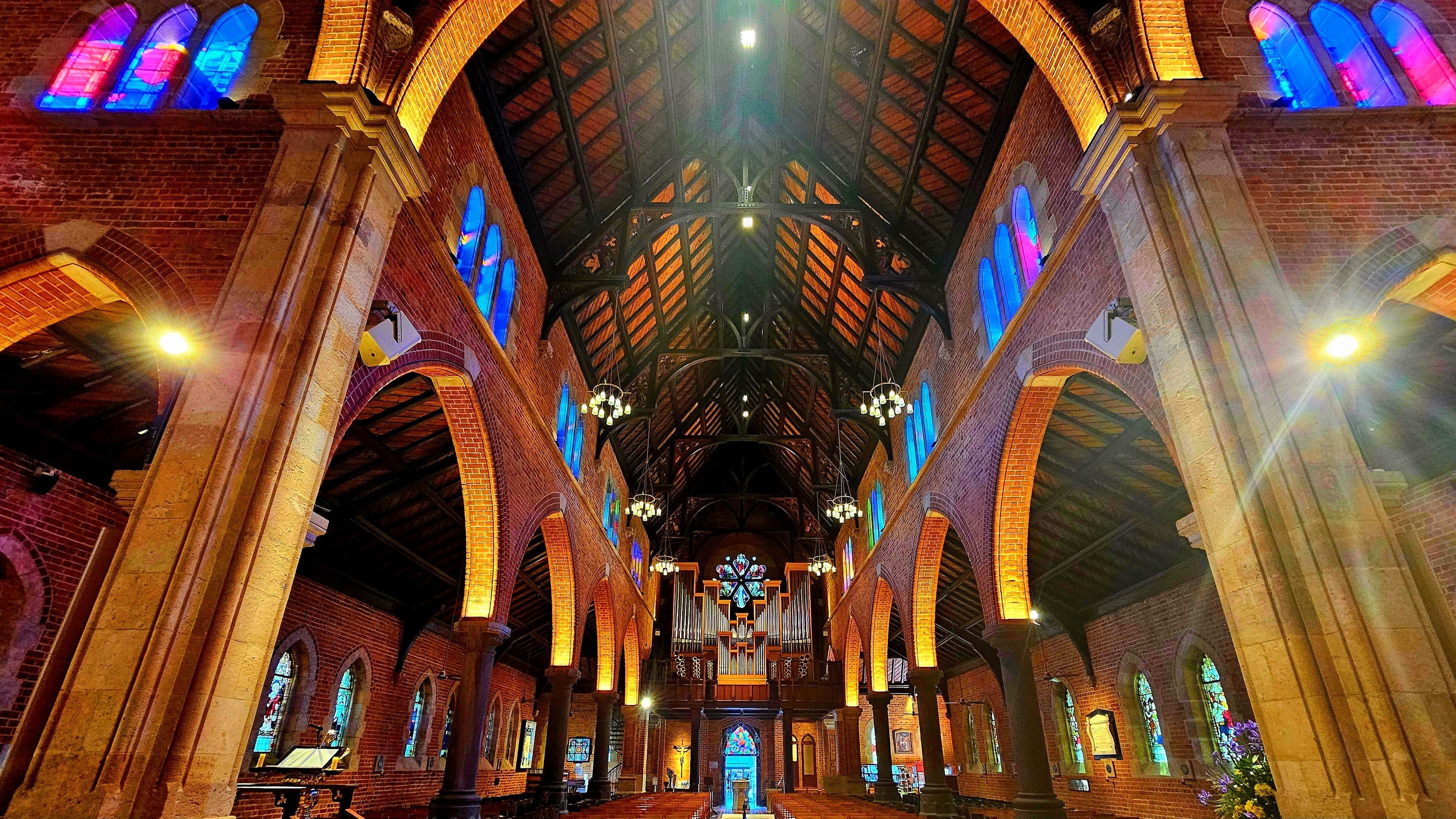
Music also shapes the stories of our church communities. This is most obvious in places with distinctive music traditions such as Iona Abbey in Scotland and the Taizé Community in Burgundy, France. However, each church has its own repertoire that reflects its own story. For instance, at St John’s in Waterloo, where I served as musical director between 2010 and 2016, we had an eclectic mix of international and traditional repertoire that reflected its history of a culturally and ethnically diverse congregation. By shaping the stories of our church communities, music helps us to create places that invite a sense of the divine beyond each act of worship: places of profound hope to which we return over time, physically and in our memories.
What I would like to explore here is how music shapes who we are, individually, as followers of Christ. This is important because the cross and resurrection demand that we re-assess who we are and how we see ourselves in relation to the world. The resurrection inaugurated the new creation, which fundamentally changed the world into one where the values exemplified by Jesus take centre stage. This means that we, as followers of Christ, are called to set aside worldly values and hold our actions to a different standard. This a significant change – one that impacts our hopes, fears and ambitions, and ultimately how we see ourselves full stop.
Nowhere is this transformation clearer than in the life of St Paul, whose Feast Day (shared with St Peter) is on 29 Juneh. Following a dramatic experience on the road to Damascus, Paul turned from being a persecutor of early Christians into one of our greatest advocates. In doing so, he had to wrestle himself down from the privileged position of Roman citizen and member of the Jewish elite into one of danger and affliction:
But whatever gain I had, I counted as loss for the sake of Christ. Indeed I count everything as loss because of the surpassing worth of knowing Christ Jesus my Lord. For his sake I have suffered the loss of all things, and count them as dung, in order that I may gain Christ and be found in him…. Philippians 3:7–9, NIV
Such a fundamental change in the way we see ourselves is difficult to imagine, let alone bring about. For most of us, it will not involve a dramatic experience but will be a gradual process, taking time and support.
Music can be an important source of such support. The lyrics of hymns, songs and chants are often remembered more than sermons and influence how we think about the Christian faith and its implications for our lives. The music itself can have a profound impact on us and even accompany a direct experience of the divine.
Music can also help us to weave the ongoing Christian narrative into our personal narratives: the stories that underpin our sense of self. Above I mentioned how each church community is distinguished by its unique story. In a similar way, we build our own self-identity by constructing personal narratives – stories of our lives, comprising formative experiences that have shaped who we are. Music helps us to recall elements of that narrative, often by association, which reinforces our sense of self. For instance, the spiritual “Over my head, there is music in the air” will always conjure memories of St John’s, connecting me back to experiences that nudged my thoughts and actions in the direction of the cross and resurrection, which continues to reinforce and instil them.
Of course, the way music connects us back to formative experiences at church applies to anyone, whether or not they happen to be involved in making or leading the music. The fact I was so involved adds an extra dimension, in that the experiences are not just recalled via music – they were formative as music-making activities. Music is how I “do church” – I suspect the same is true of many church musicians.
One can imagine that Paul kept very different company once he had renounced his role and status. This was not just a result of his ongoing transformation but reinforced it. In a more subtle way, church music helps us to see ourselves differently in the world by putting us in contact with individuals with whom we wouldn’t normally mix, in a context that breaks down the barriers between us. Within St John’s choir, we had a healthy mix across the socio-economic spectrum; many different nationalities; a range of theological perspectives; the young and old. Indeed, church communities are one of the few places where different generations intermingle and St John’s was no exception. Just for an hour or two, identities and social structures that dominate lives outside of church were suspended, enabling the choir members to see themselves within a different, more equal and empowering community.
Paul’s transformation required significant sacrifice – in the passage from Philippians quoted above, Paul writes that he “suffered the loss of all things”, leading ultimately to martyrdom. Working through the darkness to reach the light is a key theme of the cross and resurrection. It is also, for authors such as Søren Kierkegaard, necessary to work through despair to establish a true sense of self. We need honesty if we are truly to change – honesty with ourselves, that names our complicity with the evil in the world and seeks to transform it. This sort of honesty is not easy to muster or to encourage in others. Music can help, such as by creating a reflective atmosphere during worship, or by engaging the darkness and drawing us through it into the light. An excellent example of the latter is Shirley Murray’s hymn “Touch the Earth Lightly”, the second verse of which moves into a minor key and acts as a prayer of confession for our destructive actions that endanger the world.
In sum, music is a powerful tool that shapes not only our worship and church communities, but ourselves as followers of Christ. So, if you are a church musician or work closely with them, think about the opportunities you are providing – or could provide – for the congregation to self-reflect and connect their personal narratives with the ongoing Christian story. This could be, very simply, by encouraging them to sing or play their instruments in worship and allowing the Spirit to do the rest.
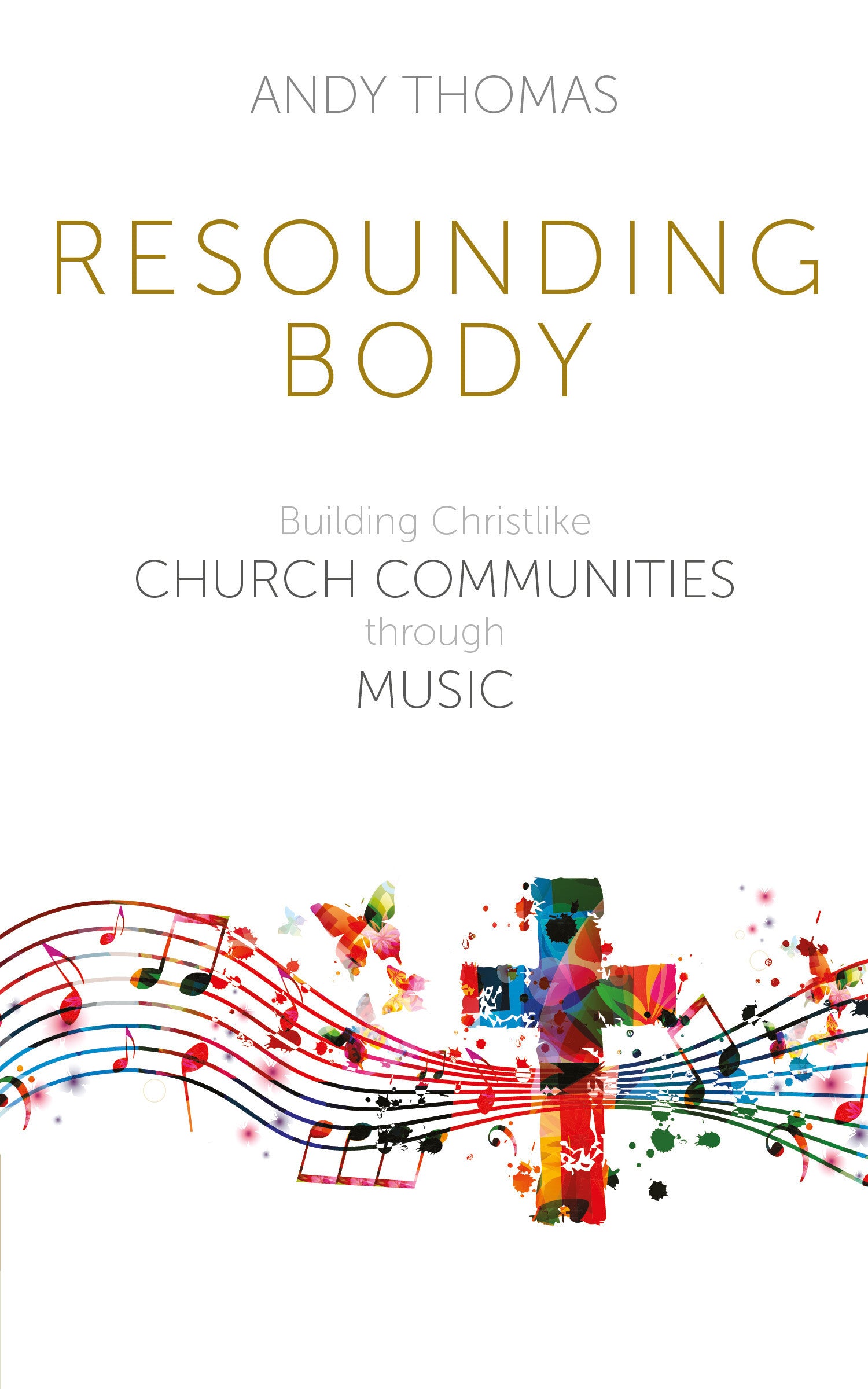
Andy Thomas is the author of Resounding Body: Building Christlike Church Communities through Music and Resounding Hope: Nurturing Hope in our Church Communities through Music, both published by Sacristy Press and available in paperback and on all major e-book platforms.
Image: Andreas Gruhl/Adobe Stock