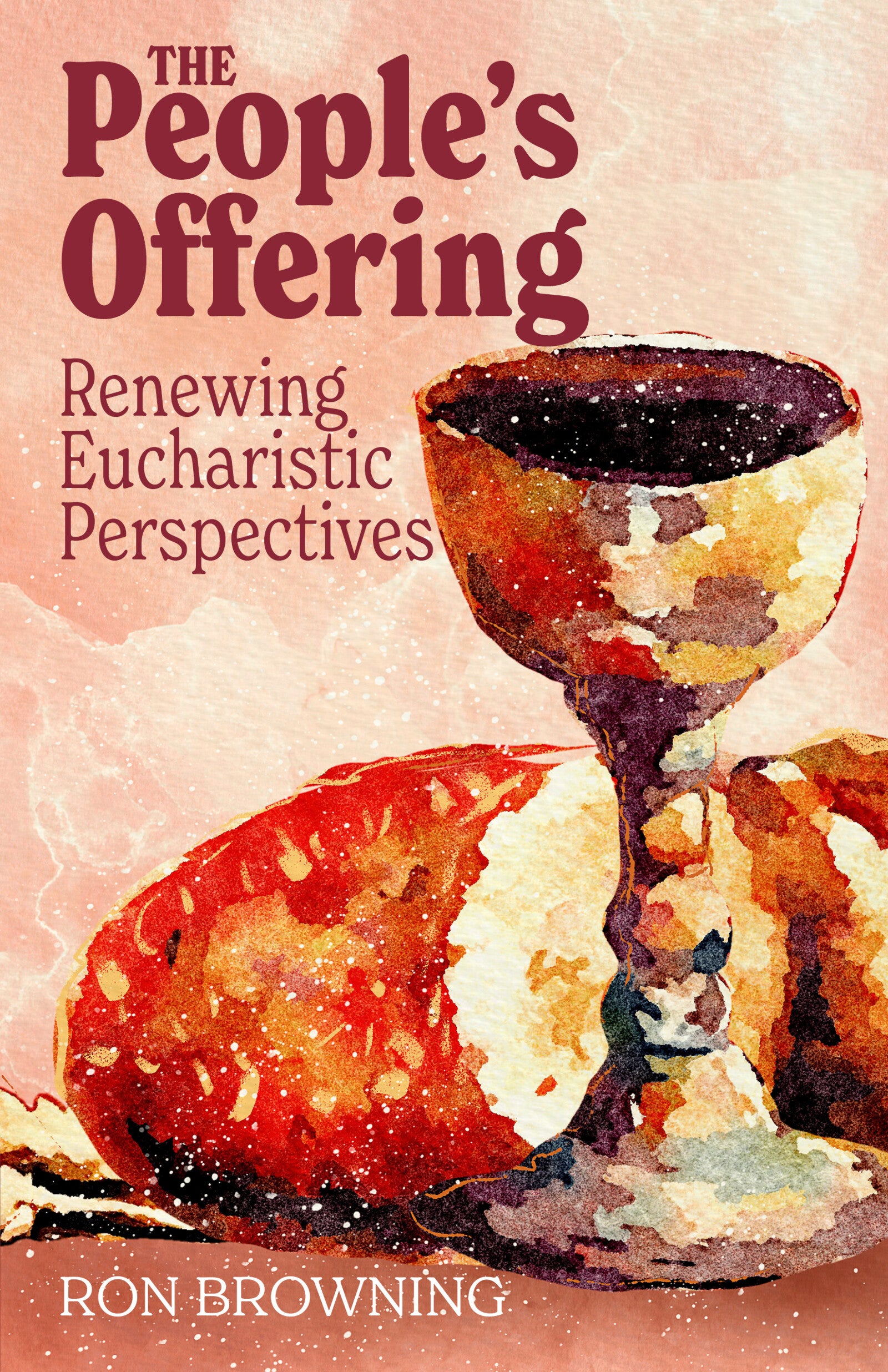
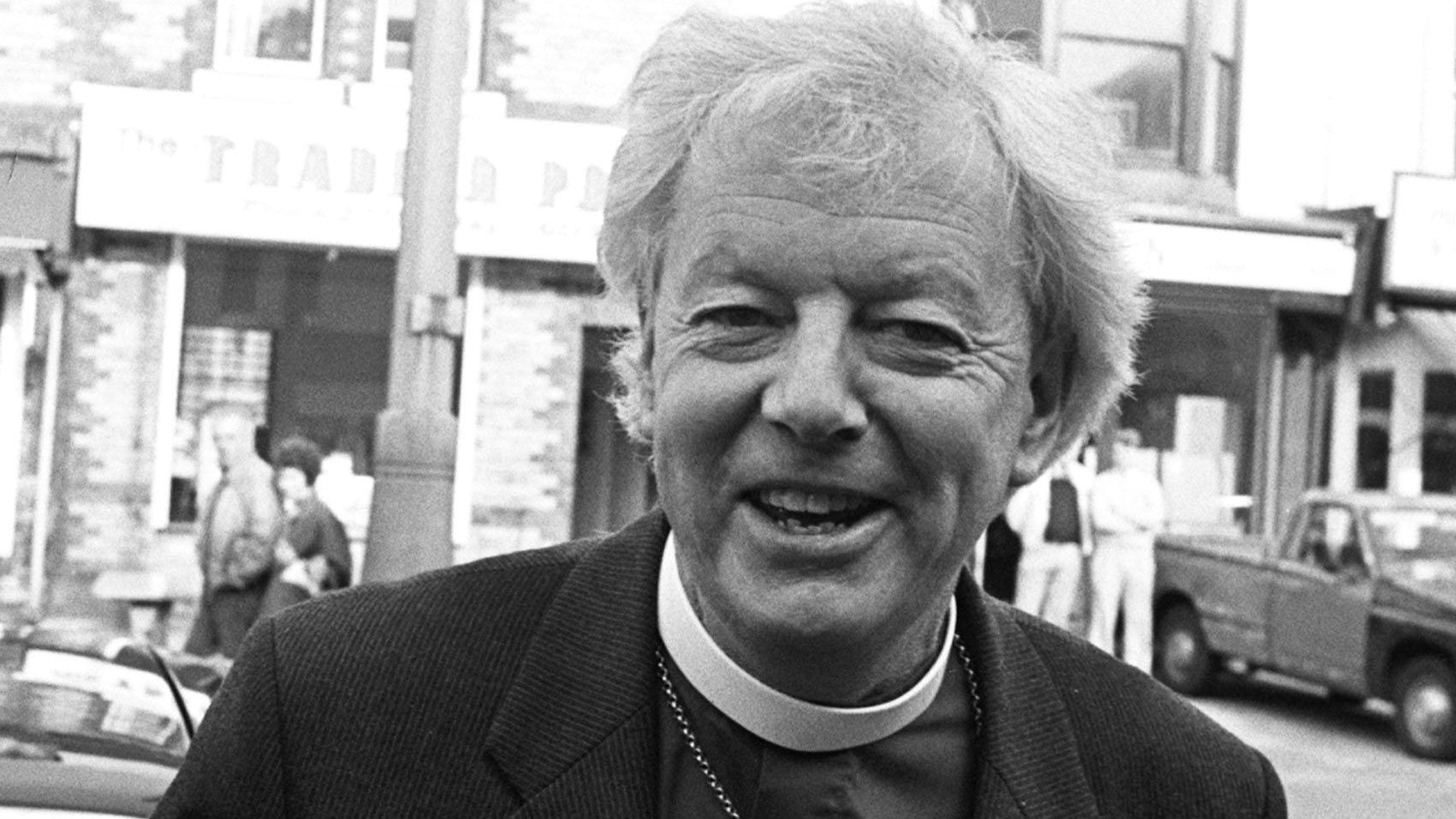
The Right Reverend Dr Richard Treloar, Bishop of Gippsland in Victoria, Australia, introduced Ron Browning’s book The People’s Offering at the Australian launch of the book.
Thank you, Ron, for the gift of conciseness! The last book I launched was 824 pages – Peter Campbell’s fine history of Trinity College in its 150th year. That Launch was so long we needed an intermission! But at just 164 pages, we’ll have you out of here in no time!
Ron was Chaplain of the College when I was a resident theolog here in the late 1980s, and it’s a great honour to launch the work of someone who modelled such good eucharistic theology and practice. When I was Chaplain here a decade later, I tried to channel some of the ways Ron was for us, liturgically and pastorally; and working with undergraduates will really test your theory of ex opere operato!
We’ve also both been blessed to be shaped by the sacramental spirituality of the Karen people – Ron far more so than me – and worshipping in some of the refugee camps along what was the Thai–Burmese border revealed new dimensions of “the peoples’ offering”.
It’s these and other diverse pastoral experiences over many years of priestly ministry that I see informing Ron’s work here – along, of course, with the writings of Kenneth Stevenson, to whom the book is dedicated.
In his Foreword, as co-chair of ARCIC, Philip Freier highlights the ecumenical lens that Ron uses – chiefly through a recovery of the celebrated Baptism, Eucharist and Ministry text from the WCC, and touches on what was both lost and gained in the English Reformation.
And the tension between Eucharist as “people’s offering” and Eucharist as “Christ’s offering” is precisely where Ron dives straight in. He argues persuasively that a sixteenth-century over-correction has led to a narrow view of atonement theology on the part of Reformers, which is still reflected in much contemporary Anglican liturgy.
Whereas we gained much from resisting rampant clericalism, we lost some of the ancient Christological themes, especially perhaps Jesus’ triumph over social and structural evil on the cross, as distinct from – or in addition to – atoning for individual sin.
Behind this exercise of theological retrieval lies a very important pastoral and spiritual question about what we bring – “offer” – when we come to “receive” Communion.
Are we empty vessels waiting to be filled with sacramental grace? Or does our baptism mean we bring lives that are already Christ-shaped, even Christ-filled, as members of his body? No chocolate bars for guessing where Ron lands on that one!
Though, being a good Anglican, his worldview is not a binary one. Striking a balance between God’s prevenient grace in Christ, and our free-will offering is a “both / and” liturgical project – grace enabling grace; grace upon grace; or synergeia as the Orthodox would say.
Ron leads his readers – who I hope will be experienced clergy and the newly ordained, ordinands and liturgical assistants, church musicians, faithful communicants, church historians, Liturgy Commissions, dare I say bishops! – Ron leads us up-tempo and sure-handedly through the evolution of the eucharistic shape and pattern as we experience it today – as story, gift and response, to use Stevenson’s framework – before turning to some critical “so what” questions:
- How does a recovery of “the people’s offering” connect with a cultural sense of agency in our context?
- How can we retrieve the Eucharist as a sign and instrument of hope in an anxious world, and an anxious church?
- And what might be some of the implications for liturgical revision?
That’s the “balcony view”, as my Org Psych partner would say. Let me move down to the “dance floor” and zoom in on some things that really struck me – but don’t worry, there will be no liturgical dance!
Ron shines new and old light on the word “sacrifice”, as a subset of offering – a particular kind of costly offering. In Latin (and let’s face it, everything sounds better when translated into Latin!) the word carries a sense of “making sacred”.
In a eucharistic sacrifice of praise and thanksgiving, our remembering of Christ’s self-offering sacralizes it for us in the present, rather than simply memorializing it in the past.
The significance of this is narrated in some of the vignettes Ron offers, especially in terms of the co-mingling of Christ’s offering with ours; part of which is intercessory – by which is meant not simply the shopping list of petitions, the “second homily”, or the political pitch that we sometimes hear after the creed on a Sunday, but rather the two-way bridging of heaven and earth, whereby Christ’s interceding at the right hand of the Father is echoed by ours for those he came to save.
Ron sees this as being somewhat preserved in Cranmer’s placement of the Intercessions after the Offertory, as something “offered” to the divine majesty along with alms and other oblations.
The influence of Hippolytus on twentieth-century liturgical reform is very helpfully described, alongside the full text of his Eucharistic Prayer – a great kindness to those who may never have seen it, and to those of us who have seen it but whose memory of it has faded!
It represents “a theology of Christ’s redeeming work that emphasizes the overcoming of death and evil, rather than ... sin [ ] reflecting [ ] a divine sympathy for the human condition”. (31)
Something other than penal substitutionary atonement is operative here. Ron quotes J.T. Wright to great effect: “Punishment due to satisfying God’s wrath must be replaced by God’s rescuing love which won the victory over the forces of darkness, as the Early Church taught, summoning believers to imitate the self-giving love of Jesus.”
For those who are keen to see Anglicanism’s roots continue to sustain our precious and fragile Communion, the reminder that our eucharistic theology is grounded in that of the earliest Church, every bit as much as in the Reformation, is welcome, and timely.
Even so, Cranmer himself, along with John Jewel, Lancelot Andrewes, Richard Hooker, Jeremy Taylor, Edward Pusey, and others who pushed the boat out bit by bit in terms of eucharistic “offering” are all given a good and sympathetic hearing – incremental development over subsequent centuries that is gathered up of course in William Bright’s classic offertory hymn, And now, O Father, mindful of the love.
All of this prepares the ground for Ron to reconnect Baptism and Eucharist specifically in terms of offering – both our connection in baptism to Christ’s own offering, and the graced offering of ourselves as a living sacrifice in response to our baptismal identity and calling.
Not in response to receiving communion, note, as in APBA, following 1662. Rather, by virtue of coming to the table “dripping wet” (nod to Charles Sherlock!), as those baptized into Christ as per 1549 and 1928 – “bring it back”, says Ron, and so say some of us!
Again, sharing in Christ’s mission of overcoming evil need not be separated from the forgiveness of sin; the two are of one piece: reconciled around the table of Jesus’ offering and ours, we go out as agents of reconciliation.
And it’s not just the good bits of ourselves we bring, in that Augustinian sense of our whole selves being part of the offertory along with bread and wine. Excurses on trauma and the Eucharist in situations of violence explore its capacity to absorb and transform the rivalry that leads to both.
And not just ourselves, but the whole afflicted creation is offered to the Creator for healing and transformation through Christ, the Agnus Dei, who takes away the sins of the world, for the salvation of the whole world.
Hence the importance, in our “splinterizing” digital age, of the Eucharist as a locus for Christian agency. “Christian faith speaks of the graced, communal approach to life in society, not one of stoical, gritting determination nor of withdrawn isolation, but rather an approach that is enabled by communal, sacramental worship.” (93)
As we are seeing in our current geo-politic, people without agency become fearful, and are easily controlled by tyrants; whereas the Eucharist manifests the Kingdom of radical inclusion and equality.
In the penultimate section of the book, all of these insights are brought to bear on what Gregory Dix would call the “shape” of the liturgy, and what it might look like if we took seriously the Eucharist as the people’s offering, the first fruits of what is, and what will be, gifts given back to the Giver Good, deconstructing the world’s economies of exchange.
Ron concludes with a beautiful section on the spirituality of the Eucharist, drawing on the work of Rob Wally, of blessed memory.
But it’s Ron’s own poem that I think best captures that devotional aspect by which we approach the table as pilgrims, and with deep reverence, as we surely must, and which lifts us back up to see the bigger picture:
The Eucharist is my life / Not only when in strife.
Like a person I love / Descends the Holy Dove.
Word and sacrament combine together / Never the two from each other sever.
I prepare, enter and there adore / Offering and receiving, much to restore.
Christ’s brokenness is healing what is broken / His gifts to us are more than just token.
“My Lord and my God” in the mystery of Grace / His deep wonders in my life are so rich to trace.
With that, it is my great pleasure to launch Ron Browning’s splendid and fragrant offering: The People’s Offering.
+Richard Gippsland, Trinity College, St Anselm of Canterbury, 21 April 2026